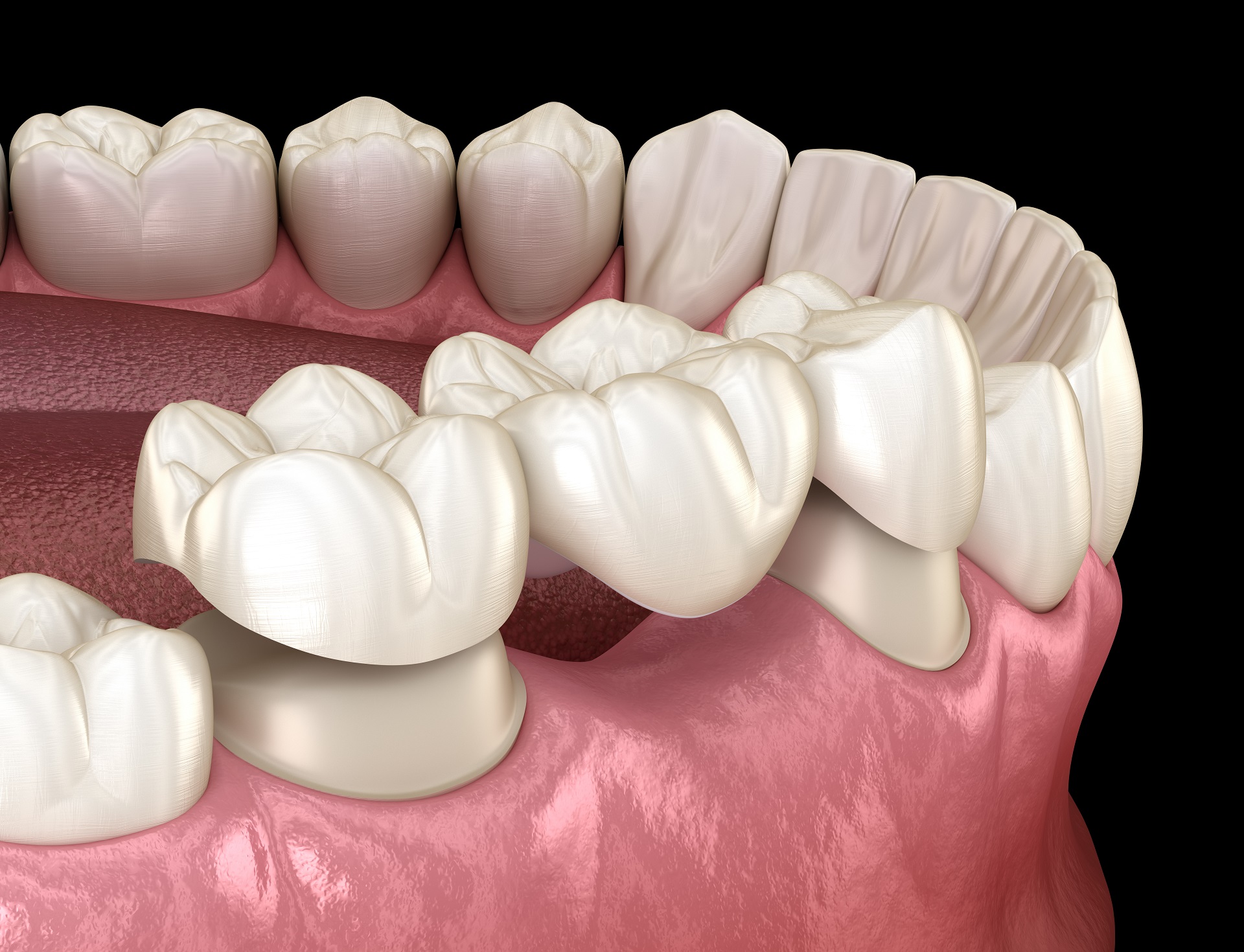
 Missing one or more teeth can affect your smile, your chewing ability, and even your overall health. At the South Florida Institute of Oral Surgery, we often help patients navigate the decision between two common restorative options: dental bridges and dental implants. Both can serve well—but the best choice depends on your oral health, budget, timeline and long-term goals. Let’s compare.
What is a dental bridge?
A dental bridge is a prosthetic device that “bridges” the gap created by missing teeth. Typically, it uses crowns on the adjacent healthy teeth as anchors and a false tooth (or teeth) in between. It restores appearance and basic function more quickly and often at a lower upfront cost compared with implants.
What is a dental implant?
A dental implant is a titanium (or other material) post placed into the jawbone, which acts like a tooth root. After healing (osseointegration), an abutment and crown are attached, resulting in a replacement tooth that mimics a natural tooth in form, function and health of the surrounding bone.
Comparing the two: pros and cons
Dental Bridges – Pros:
-
- Faster to complete (can often be done in weeks)
- Lower initial cost than implant placement in many cases
- Doesn’t require surgery (beyond tooth preparation of the adjacent teeth)
Dental Bridges – Cons:
-
- Requires altering (shaving down) healthy adjacent teeth for the crowns
- Doesn’t preserve bone in the gap—over time, the bone may resorb leading to changes in facial appearance or gum contours
- Lifespan can be shorter (often 10–15 years) and may require replacement
Dental Implants – Pros:
-
- Mimics natural tooth root, preserving bone and preventing resorption
- Doesn’t compromise adjacent teeth (no shaving down)
- Longer lifespan (many last for decades with good care)
- Better chewing efficiency and comfort in many cases
Dental Implants – Cons:
- More expensive upfront
- Requires surgery and a healing period (several months)
- Longer time to final restoration compared with a simple bridge
How to decide what’s best for you
- Bone volume and health: If you have sufficient jawbone, implants are often the ideal. If bone is deficient, grafting may be needed (see our previous post).
- Adjacent teeth condition: If the teeth next to the gap are weak, heavily filled or already crowned, a bridge may make sense.
- Budget and timeline: If cost and speed are top priorities and future maintenance is acceptable, a bridge may be selected.
- Long-term goals: If your priority is long-term stability, preservation of bone and minimal impact on other teeth—an implant may be worth the investment.
- Medical and surgical suitability: Some patients may not be candidates for implants due to systemic health issues — a thorough consultation can clarify.
The SFIOS approach
At SFIOS, we don’t believe in “one size fits all.” In your consultation, we’ll use detailed imaging to assess your bone, teeth, gum health and general health. We’ll walk you through both options—including costs, timeline and expected outcomes—so you make an informed decision. If you choose an implant, we’ll coordinate with your restorative dentist to ensure the final crown fits beautifully and functions properly.
Case snapshot
Imagine a patient missing a molar. Adjacent teeth are healthy and strong. We find plenty of bone via 3D scan. The patient opts for an implant. We place the implant, allow healing, attach the crown, and the end result is a natural-looking tooth that functions like the original and helps maintain bone. Contrast that with a patient who chooses a bridge: the adjacent teeth are shaved, the bridge is placed in a few weeks, but in 10–12 years the supporting teeth may require repair and the jawbone under the gap may have shrunk slightly.
Final thoughts
Bridges and implants both play meaningful roles in restorative dentistry. The “right” choice is the one that balances your needs, anatomy and long-term vision. At SFIOS, our goal is to guide you clearly and compassionately through the decision. Contact us today for a consultation at either our Coral Springs or Pompano Beach location and let’s find the solution that’s right for your smile.